
What Technicians See When the First Cold Snap Hits
Every year it's the same pattern: temperatures drop below freezing for the first real stretch, and the service calls start rolling in. A homeowner hits the opener and the door groans, jerks, or barely moves. Someone else finds their door frozen to the garage floor after an ice storm. Another calls because a spring snapped overnight with a bang loud enough to wake the house. None of this is bad luck — it's what happens when a door that's been coasting through mild fall weather suddenly has to work in 20-degree temperatures, road salt, and ice buildup. A little attention now, before the hard freezes settle in, prevents most of these calls.
Why Winter Is Harder on Garage Doors Than Any Other Season
Steel contracts in the cold, grease and lubricant thicken, rubber seals stiffen and crack, and moisture from melting snow and ice gets tracked in and refreezes overnight. Add the big temperature swings common to this part of Ohio — a 50-degree afternoon followed by a teens overnight low — and you get metal and rubber parts expanding and contracting constantly. That stress is what pushes already-worn springs, rollers, and cables past their breaking point right in the middle of winter.
Check the Weatherstripping Before It Fails You
The rubber seal along the bottom of the door and around the frame is your main defense against drafts, snowmelt, and road salt spray. By October, inspect it for cracking, flattening, or gaps where daylight shows through. Cold makes already-brittle rubber worse, and a seal that's merely annoying in September can let in standing water that freezes solid against the door by December. Replacing worn weatherstripping is inexpensive and takes very little time compared to dealing with a door frozen shut.
Lubricate Now, While It's Still Easy
Hinges, rollers, and tracks need a fresh coat of garage-door-specific lubricant before the cold sets in. Thickened, dried-out grease is a major reason doors start binding or opening unevenly in winter. Avoid WD-40 as a long-term lubricant — it displaces moisture short-term but doesn't hold up. Use a silicone-based or lithium-based garage door lubricant on hinges, roller bearings, and the track itself, and wipe away old grime first so you're not sealing dirt into the joints.
Clean Salt and Ice Residue From Tracks and Rollers
Once winter driving starts, cars track in road salt and slush that drips onto the garage floor and can splash up onto the lower tracks and rollers. Left alone, that salty moisture accelerates rust on metal rollers and track rails, and the grit works its way into roller bearings. A simple wipe-down of the lower track sections every few weeks during salt season keeps corrosion from taking hold.
Give Your Springs a Second Look
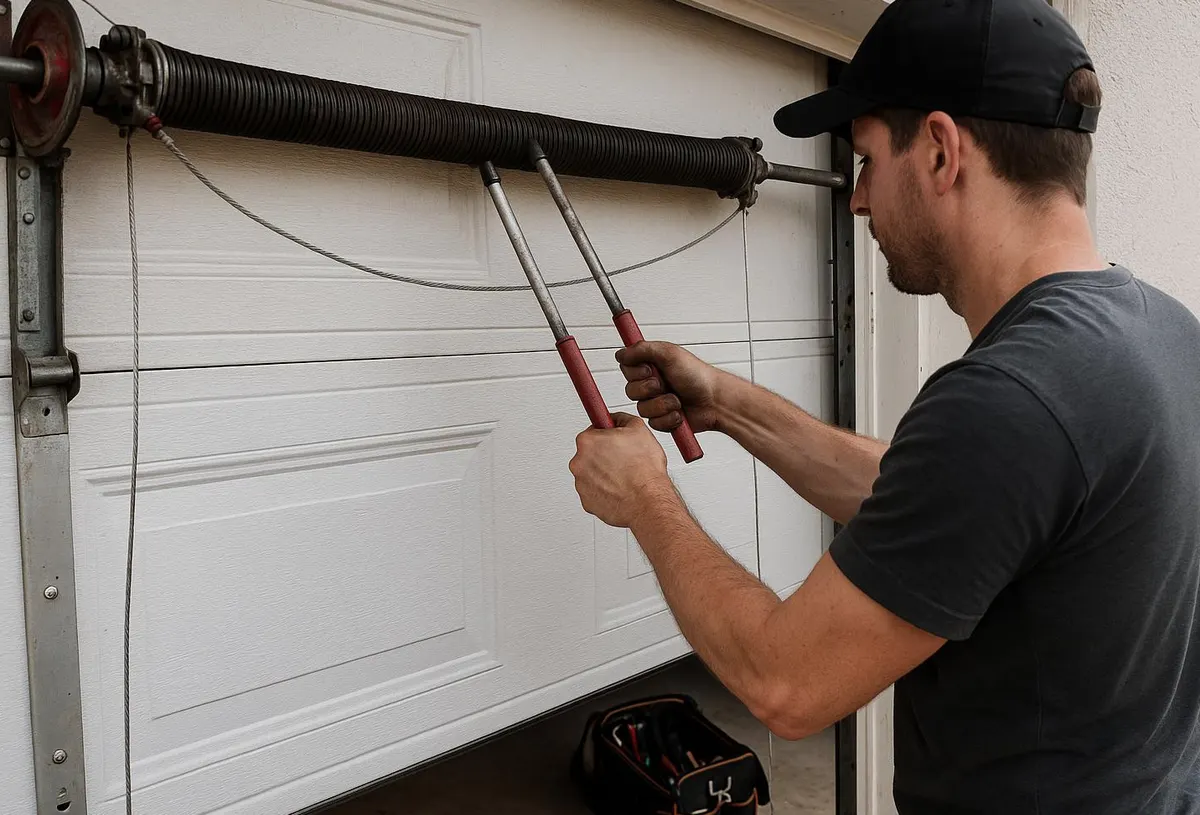
Torsion and extension springs lose tension gradually as they age, and cold weather doesn't cause that wear — it just reveals it. A spring that was barely getting the job done in October can give out entirely once steel contracts in freezing temperatures. Signs to watch for: the door feels heavier than usual when opening manually, it doesn't stay in place halfway up, or the opener strains and makes a louder-than-normal motor sound. Springs are under heavy tension and aren't a safe DIY repair — this is one job to leave to a trained technician.
Don't Forget the Opener and Sensors
Extreme cold can make opener motors run sluggishly and can affect battery backup units if your opener has one. Test the auto-reverse safety sensors by placing an object in the door's path — they should stop and reverse the door immediately. Clean the sensor eyes, since winter grime and condensation can interfere with the signal between them, causing the door to refuse to close at all.
Insulation Matters More Than People Think
For garages attached to the house, an insulated door can noticeably cut down on cold transfer into connected living spaces and workshops. If your door is older and uninsulated, weigh the cost of an insulated replacement against your heating bills and how much time you spend in the garage during winter — it's a trade-off worth considering before the coldest months hit.
When to Call Canal Fulton Garage Door
If your door is sluggish, noisy, or already struggling before the real cold arrives, that's the time to call — not after a spring snaps on a Sunday morning. Canal Fulton Garage Door offers garage door maintenance visits that cover lubrication, hardware tightening, and a full inspection of springs, cables, and rollers, plus spring replacement for doors already showing signs of wear. Catching these issues now means one planned visit instead of an emergency repair in freezing weather.
If you're in Canal Fulton, Massillon, Navarre, Clinton, Jackson Township, Lawrence Township, Barberton, or Wadsworth and want your garage door ready before winter sets in, give Canal Fulton Garage Door a call today.