
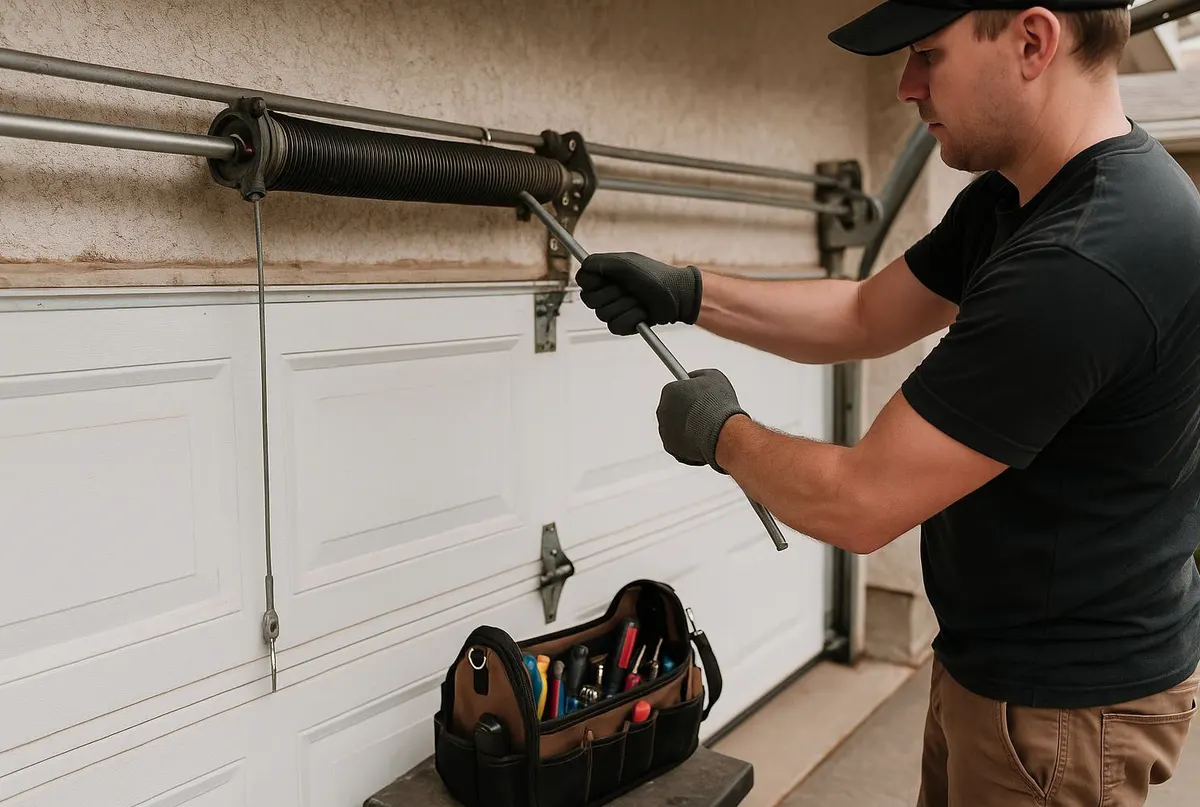
What a Technician Sees After a Windy Night
The call usually comes in the morning after a front blew through overnight. The homeowner says the door looks "off" — maybe it's bowed in the middle, maybe a panel is dented where it pressed against the track, or maybe the door simply won't open because a roller popped loose when the panels flexed. Sometimes it's worse: the whole door has come off one track and is hanging at an angle. In almost every case, the door held up fine on calm days and only showed its weakness when wind pressure pushed against it for a sustained period.
Why the Garage Door Is a Home's Weakest Wall
Most exterior walls are solid, continuous, and anchored directly into the home's frame. A garage door is none of those things. It's a large panel of jointed sections, held in place by a track system and a handful of rollers, hinges, and cables — and it's often the single biggest opening in the entire house. When wind pushes against a garage door with enough force, that pressure has to go somewhere. If the door, track, and hardware aren't rated or maintained to handle it, the door can bow, buckle, or separate from the track. Once that happens, wind can get inside the garage, and pressure can build against the roof and walls from the inside out — which is a big part of why wind damage to garages so often turns into roof damage too.
Panels and Seams
Standard residential doors without reinforcement can flex visibly in sustained wind. Over time, repeated flexing stresses the seams between panels and the hardware holding them together.
Tracks and Rollers
Tracks that are loose, bent, or just slightly out of alignment have very little margin left when wind adds extra force. A track that's been quietly drifting out of alignment for months is often the thing that finally gives during a storm.
Springs and Cables
Wind doesn't just push — it can cause the door to shudder up and down slightly, putting repeated strain on springs and cables. Cables that are frayed or springs that are already weak are far more likely to fail under that added stress.
Signs Your Door Won't Hold Up in High Wind
- Visible gaps or daylight around the edges of the door when closed
- A track that looks slightly bent, bowed, or pulled away from the wall
- Rollers that are cracked, worn, or sitting loose in the track
- A door that feels noticeably heavier or shakier than it used to when opening and closing
- Weatherstripping along the bottom or sides that's cracked, torn, or missing sections
Steps to Prep Before the Next Big Wind Event
- Check the track alignment. Stand outside and look down the length of each track. It should run straight and parallel to the door, with no visible bowing or gaps at the wall.
- Inspect hinges and rollers. Look for cracks, rust, or rollers that wobble in their housing. These are cheap to replace before a storm and expensive to deal with after one.
- Test the auto-reverse safety feature. Place a block of wood in the door's path and close it. It should reverse on contact. If it doesn't, that's a safety issue that needs attention regardless of weather.
- Tighten hardware. Bolts and brackets loosen over time from normal use. A quick pass with a wrench on visible hardware can catch problems early.
- Check weatherstripping. Worn seals let in wind-driven rain as well as drafts, and damaged seals are often a sign the door isn't sealing evenly under pressure.
During the Storm Itself
Keep the garage door closed throughout high wind. An open garage door catches wind like a sail and puts direct pressure on the roof structure from inside. If you use the garage as a safe space during severe weather, park vehicles so you can get to an interior room if needed, since the garage itself isn't the safest place to shelter during high wind or a tornado warning.
After the Storm: What to Check
Once the wind has passed, look at the door from outside for any new bowing, dents, or gaps. Open and close it manually (with the opener disconnected) to feel for new resistance, grinding, or sticking points. If anything looks or feels different than it did before the storm, don't keep running the opener on it — stressed hardware can fail suddenly.
When to Call Canal Fulton Garage Door
If you've noticed track misalignment, worn rollers, a sagging panel, or a door that's taken visible stress from wind, it's worth having it looked at before the next front moves through. Our garage door maintenance service covers a full inspection of tracks, rollers, cables, and hardware, and we handle cable & roller replacement on the spot when parts are worn past the point of adjustment. If a storm has already caused damage, we also provide garage door repair to get things back in working order safely.
Give Canal Fulton Garage Door a call before the next round of fall wind hits. We serve Canal Fulton, Massillon, Navarre, Clinton, Jackson Township, Lawrence Township, Barberton, and Wadsworth, and we're ready to help you get your door storm-ready.